Mrs. Adair's Strong Right Arm
Click image to enlarge
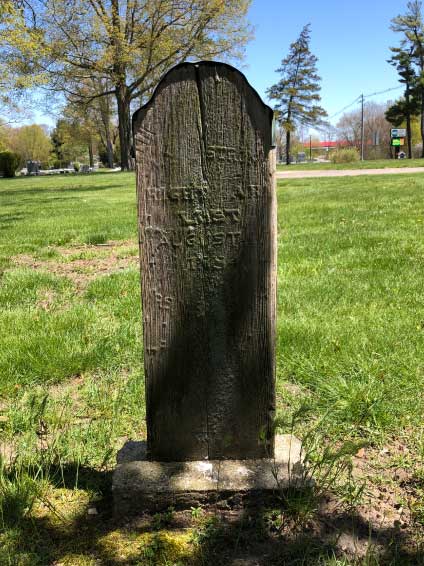
This marker states "My Strong Right Arm Lost" Aug. 10, 1884, Mrs. M.E. Adair
While Mrs. Adair was sweeping her house, she picked up her husband’s gun that discharged. The bullet tore through her right forearm, which was amputated just above the elbow by Dr. Henry Kremers. Although her arm is buried here, there is no record of where she herself is buried. Located in the Pioneer Plot, Mrs. Adair’s marker is made of wood with a tin covering along the top.
Isaac Cappon and Family
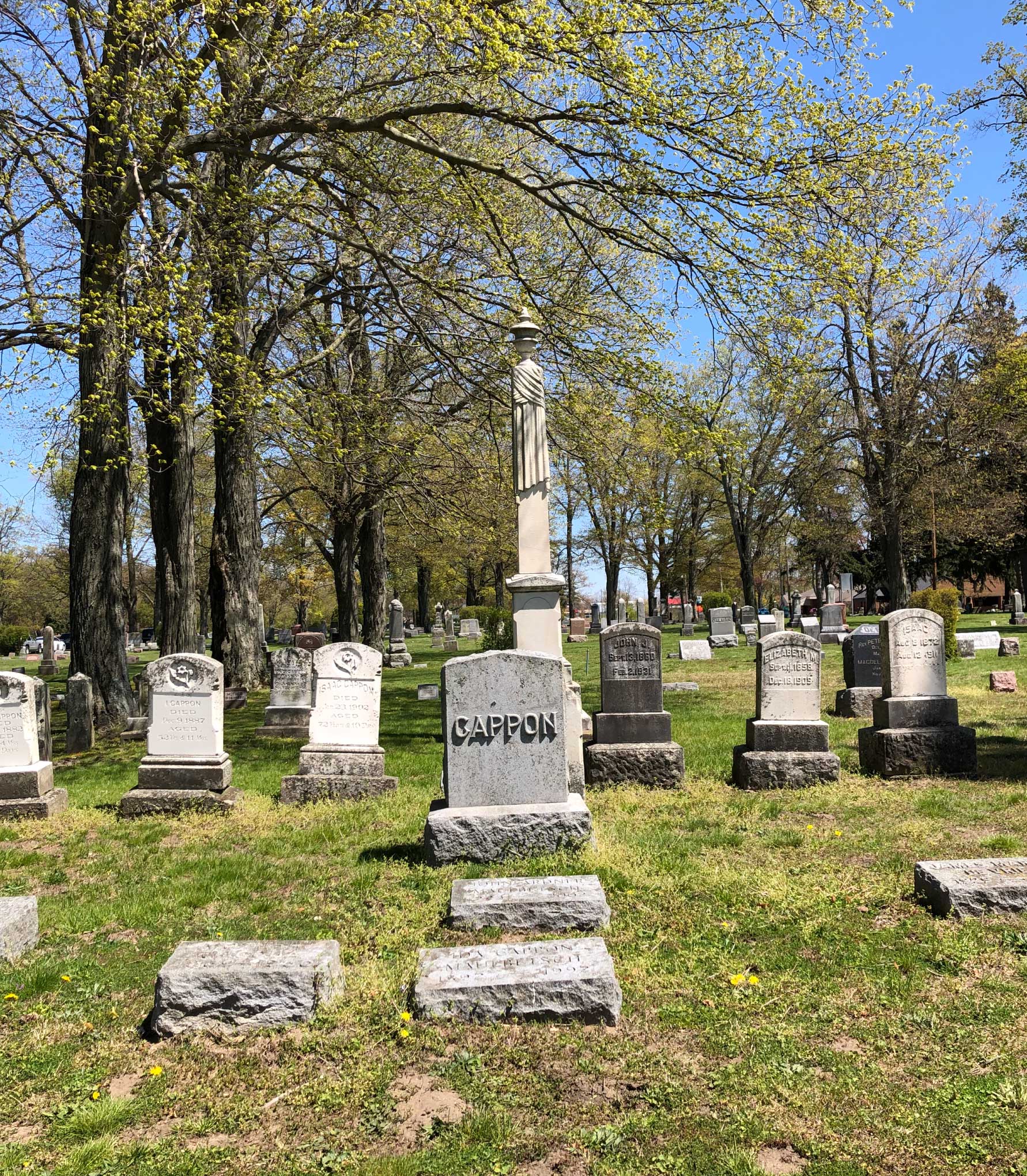 In 1847, Isaac Cappon, a young Dutch Immigrant from the Zeeland province, arrived in the newly founded Holland colony. Ten years later, Cappon and business partner, John Bertsch, opened the Cappon and Bertsch Leather Company. By the 1880s, the Cappon and Bertsch Leather Company was the largest tannery operation in Michigan and Cappon was one of the city’s wealthiest residents. The successful businessman was also an active public servant. When the City of Holland was chartered on March 25, 1867, Isaac Cappon was elected its first mayor.
Isaac Cappon was married twice throughout his life. First to Caterina De Boe, who passed away from cancer in 1887, and with whom he had eleven children. He married Jacoba De Kok in 1891. Isaac and Jacoba had six more children before his death. The Cappon plot holds many remains of this large family.
Click here to learn about the Cappon Children
-
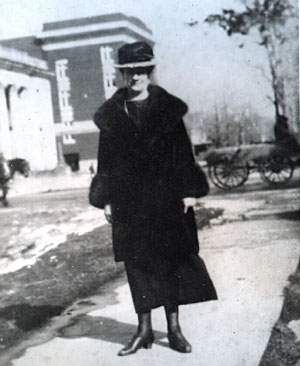
Nellie standing on the sidewalk across from the post office, which is the Holland Museum today. Image from holland museum digital collection.
-
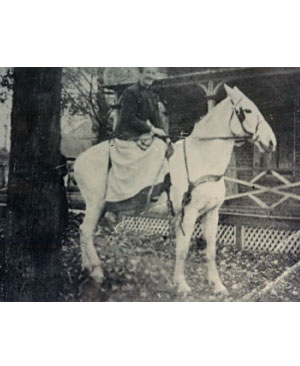
Nellie Churchford on horse, her mode of travel about Holland, Mi in the early 1900s. Image from holland museum digital collection.
-
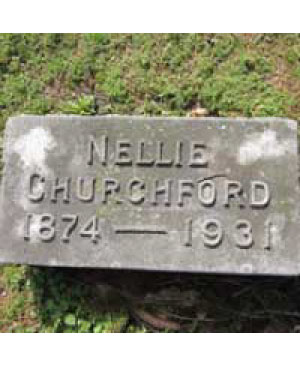
-
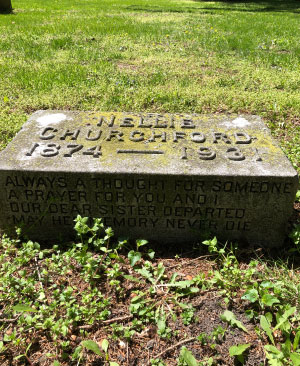
Inscription on the side of Nellie Churchford's grave: "Always a thought for someone, a prayer for you and I, our dear sister departed, may her memory never die."
Isaac Fairbanks
Isaac Fairbanks was a government agricultural agent to the Native Americans in the area when he greeted Albertus C. Van Raalte, the future founder of the City of Holland. He, along with George Harrington also started the Methodist Church here. Fairbanks built the Old Wing Mission, a settlement for the first Dutch settlers who arrived in 1846-47. Click here to learn more about The Old Wing Mission.
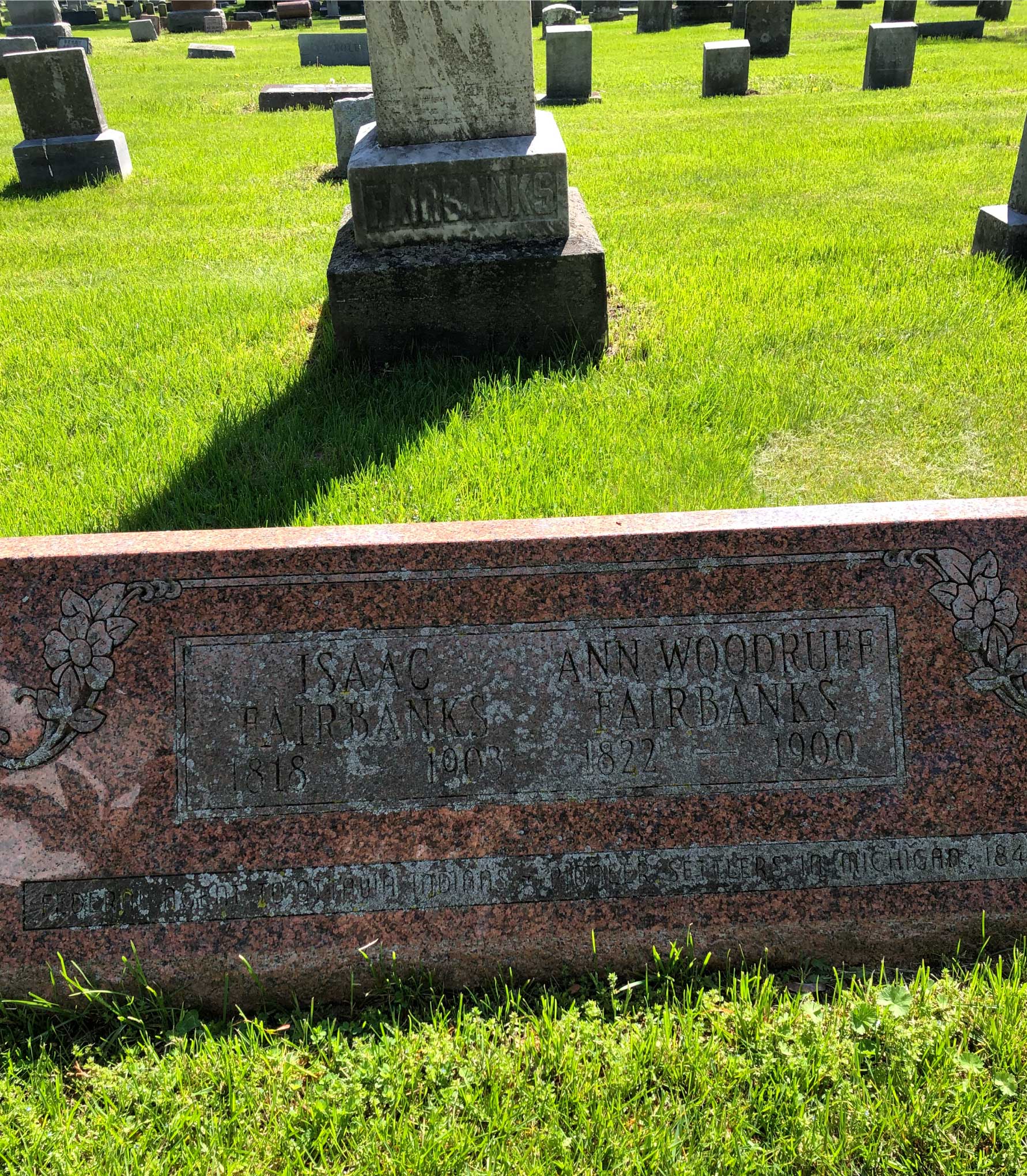
The grave of Isaac Fairbanks and his wife, Ann Woodruff Fairbanks. The grave reads: Isaac Fairbanks 1818-1903, Ann Woodruff Fairbanks 1822-1900. "Federal agent to Ottawa Indians Pioneer Settlers to Michigan."
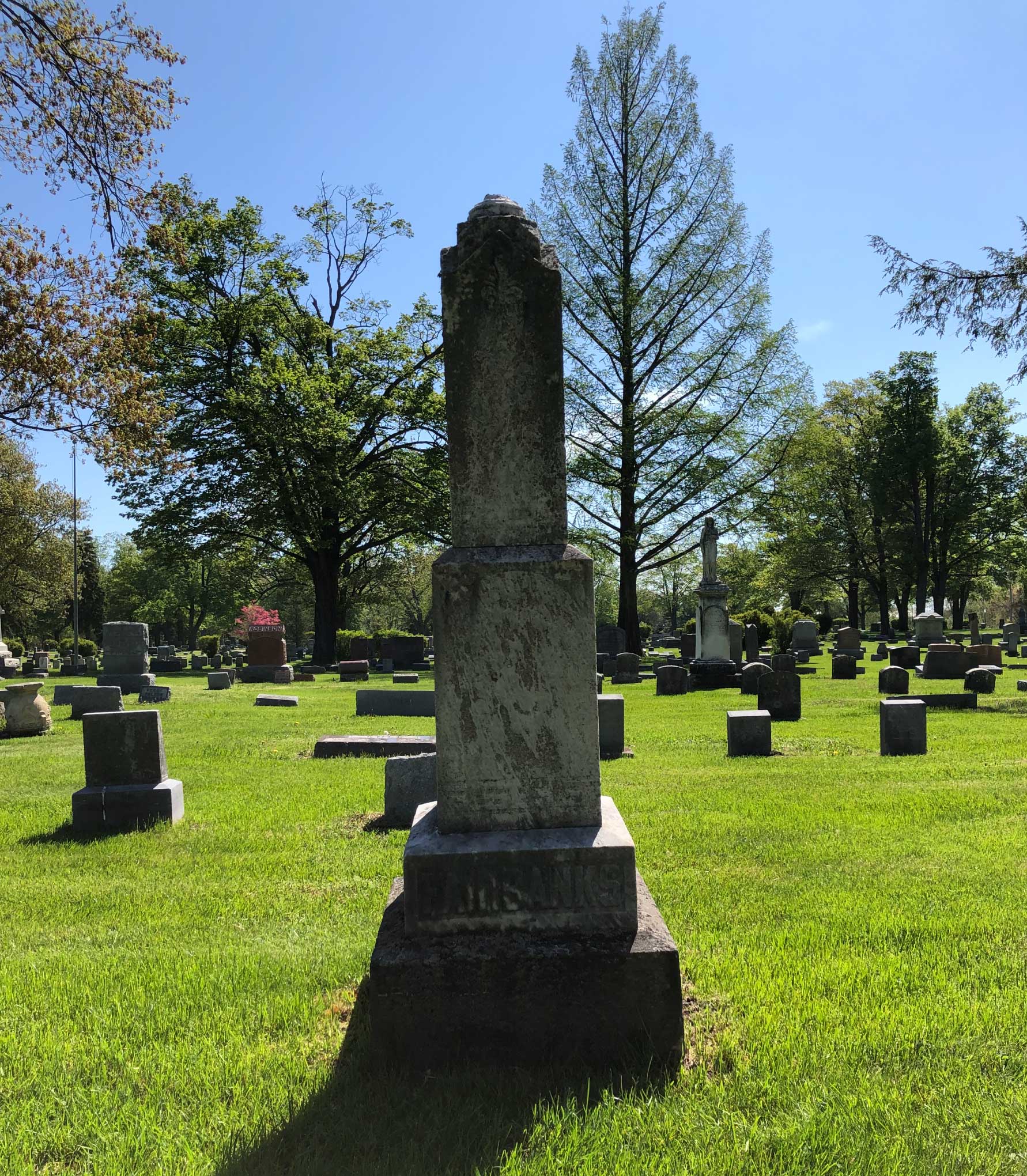
The Fairbanks family grave marker.
Teunis Keppel
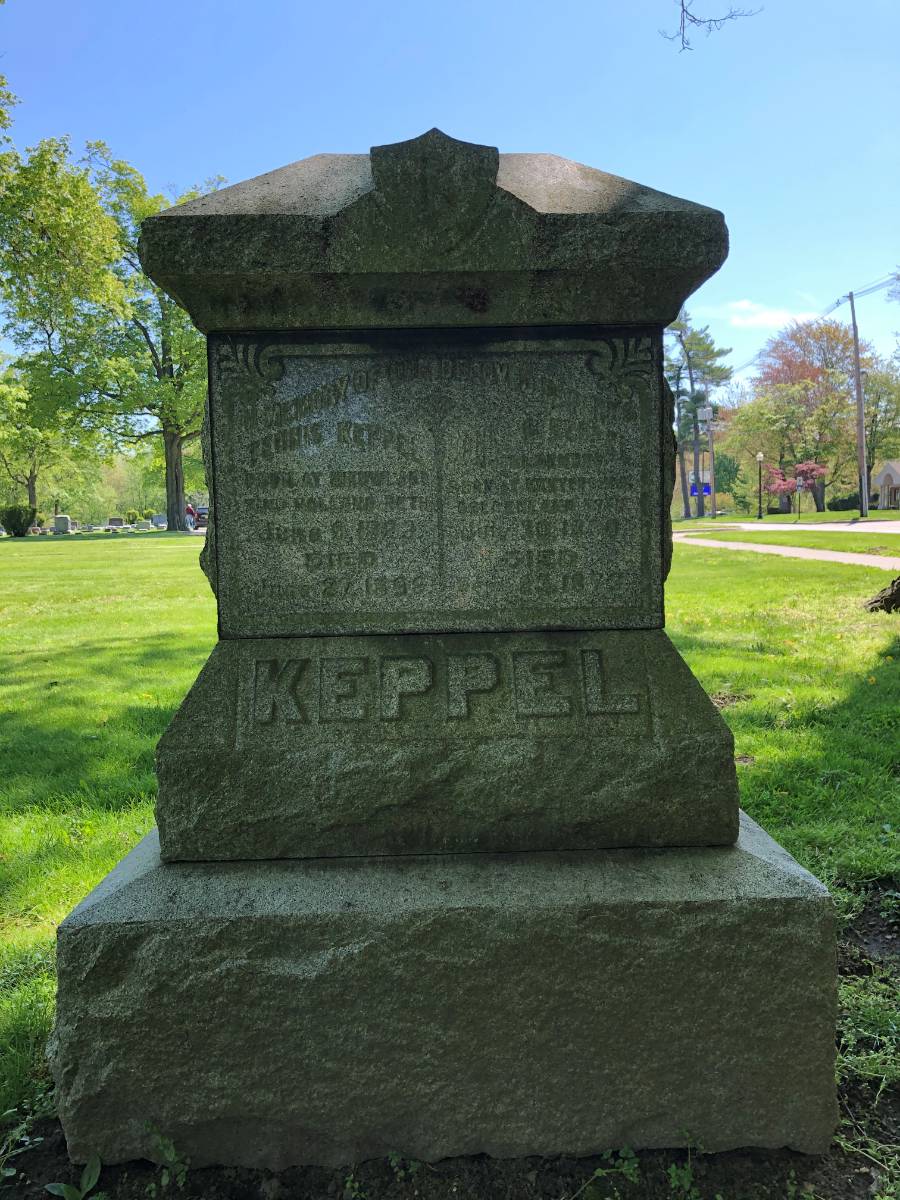
Click image to enlarge
Teunis Keppel was a prominent member of the Holland community. A farmer originally, but after the disastrous Holland Fire of 1871, Keppel established a successful business dealing in coal, oil, lime, and salt. He passed away June 27th, 1896 at the age of 73 after a lingering illness lasting about a year. His obituary stated he was "a deacon and an elder, member of the school board for more than a score of years, highway commissioner in the early days, first city marshal after our municipal incorporation [1867], alderman, member of the board of trustees of the Pilgrim Home Cemetery, treasurer of the classical board of education, superintendent of Sunday-school." Keppel is also well known for the major role he played in the Pillar Church’s separation from the Reformed Church.
Also buried here are Keppel's first wife, Gertrida Boemers, and their children who died at a young age They had 13 living children over 23 years. She passed away a year after giving birth to her last child. Sadly, only five children lived to adulthood. Keppel’s second wife was Wilhemina Van Raalte, daughter of city founder Albertus C. Van Raalte.
Keppel's tombstone reads, "In Memory of Our Beloved Parents: Teunis Keppel June 8th, 1823, Died June 27th, 1896."
Johan and Lurena Kramer
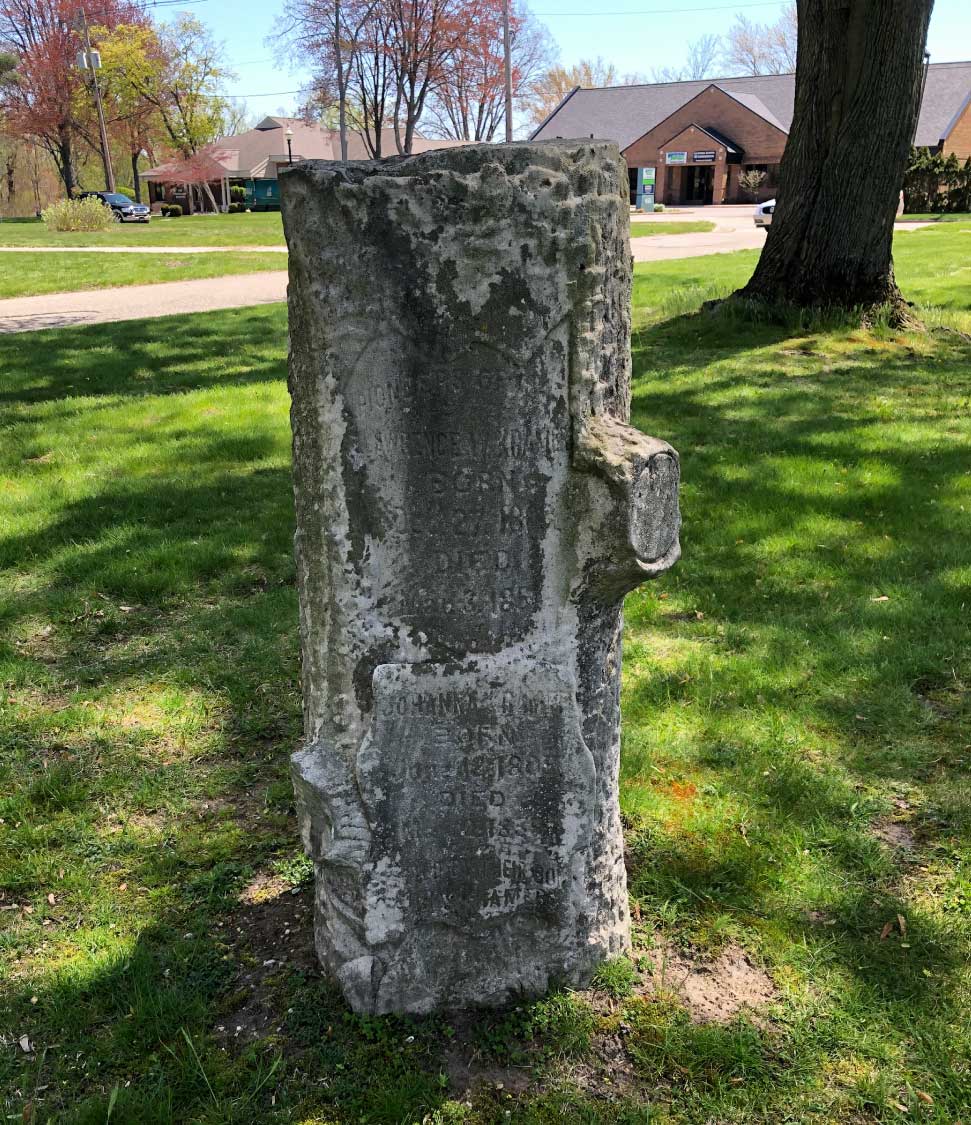
Click image to enlarge
This unique headstone, in the shape of a tree trunk, contains the remains of Johan and Lurena Kramer, who died in 1854. The stone was donated by their son John who passed in 1892. This grave is located in the Pioneer Plot.
Albertus Christiaan Van Raalte
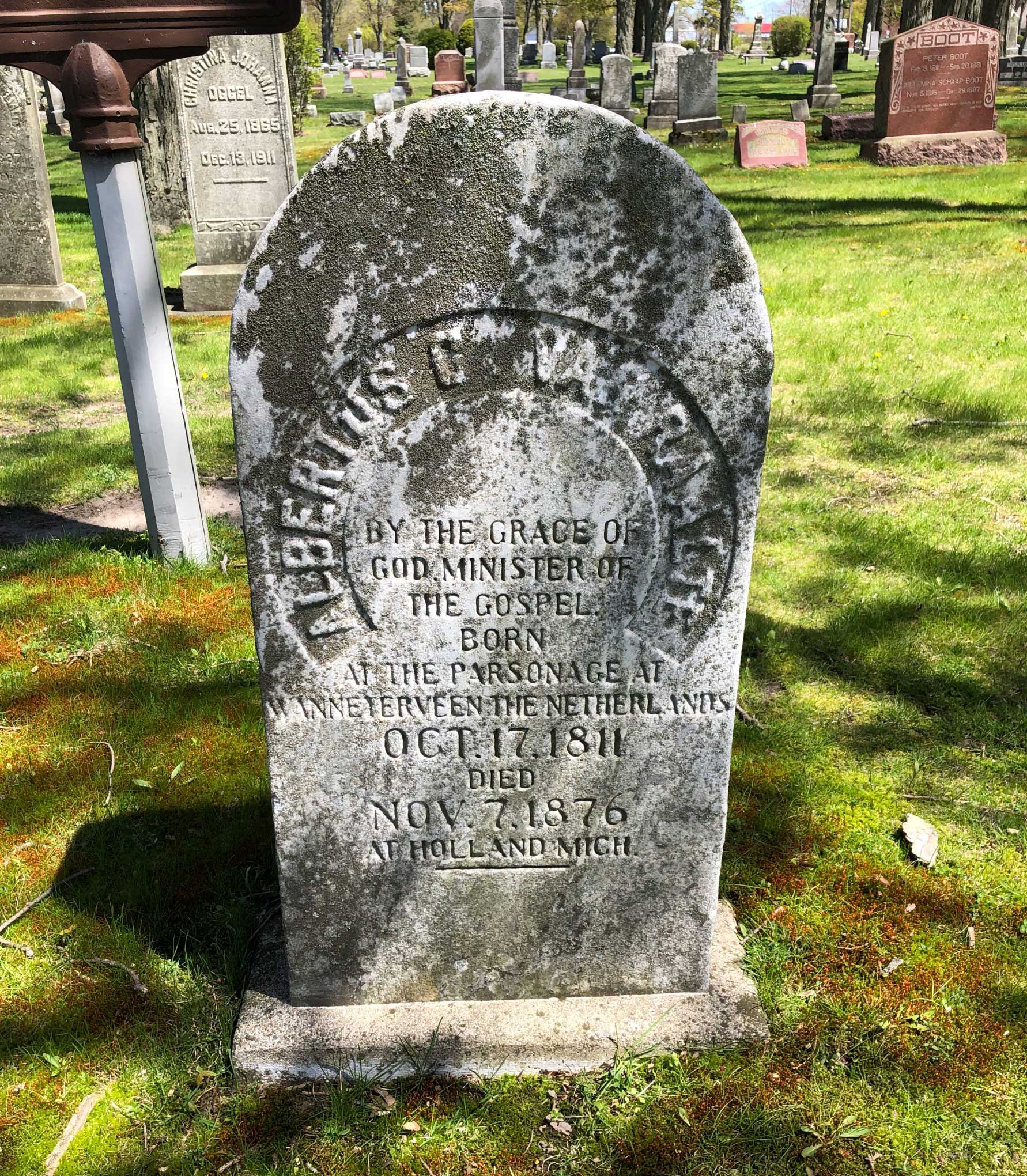
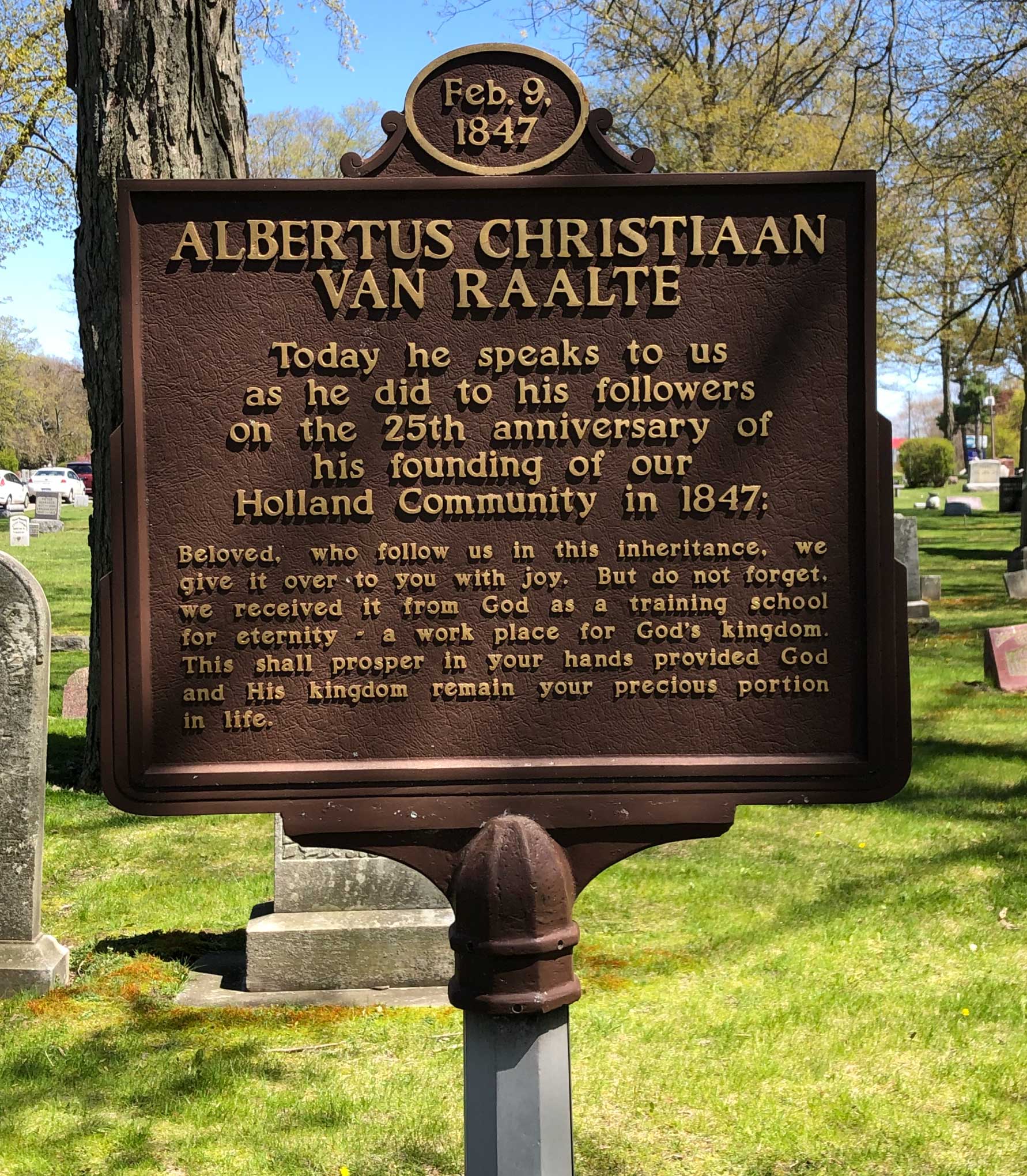
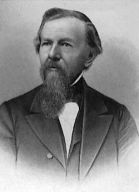 Albertus Christiaan Van Raalte was the unquestioned leader of mid-nineteenth century Dutch immigration to Western Michigan, as well as the founder of what eventually became the City of Holland, Michigan. He led the immigration to the U.S. due to religious persecution in the Netherlands.
Van Raalte established churches, schools, and a college and theological seminary which was to become present day Hope College. He also was involved in the establishment of Dutch language newspapers such as, "De Hollander," "Holland City News," and "De Hoop." Van Raalte also wrote numerous Dutch language books.
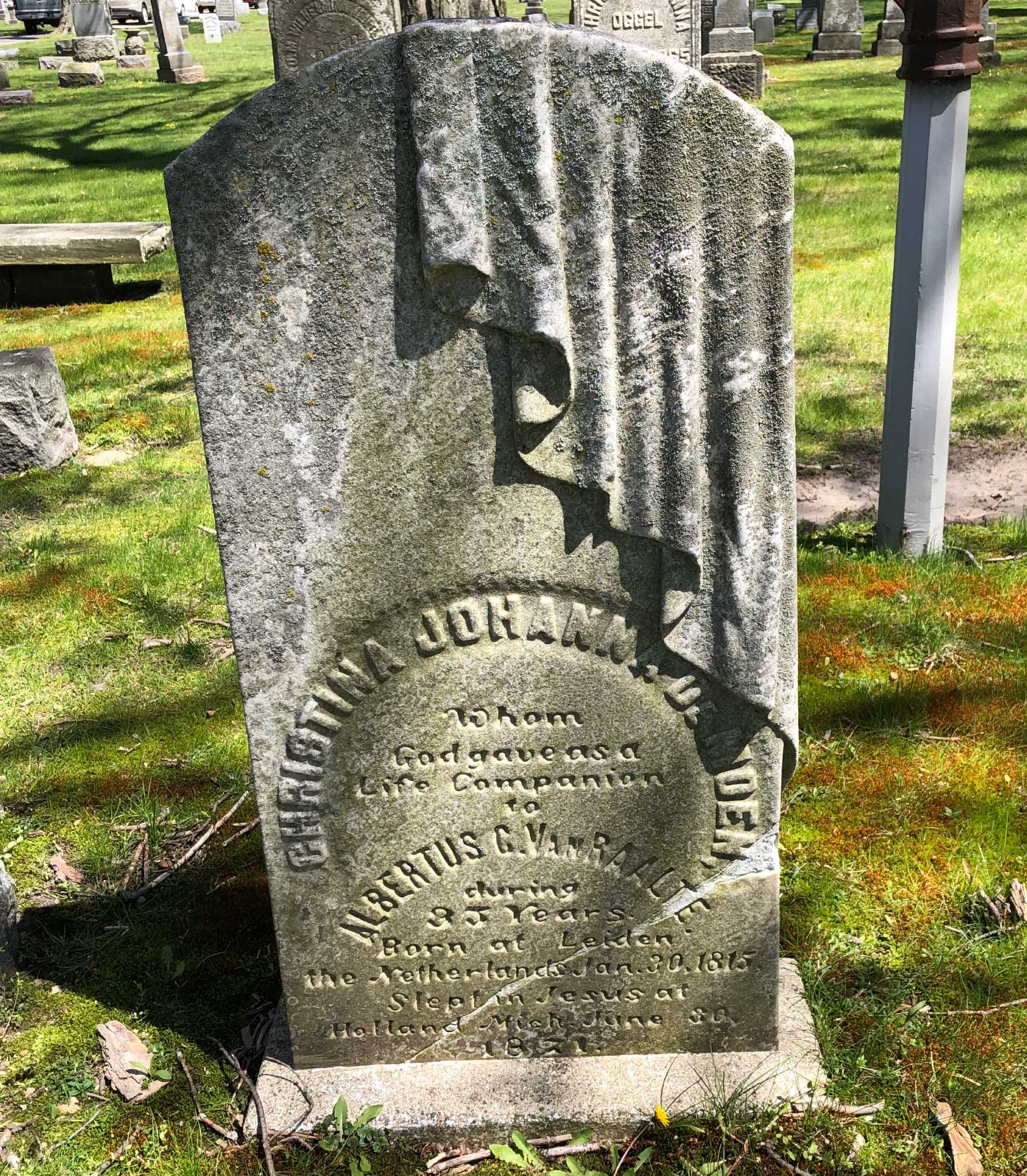
A strong opponent of slavery, he was a supporter of Lincoln and the Republican Party. Two of his sons, Ben and Dirk, enlisted in the 25th Michigan Battalion and both saw action in the Civil War. They are buried in front of him and his wife. Van Raalte was born in the town of Wanneperveen, in the province of Overijssel in the Netherlands in 1811. He was married to Christina de Moen. He passed away in 1876 following a rich and productive life.
FUN FACT: On this marker, Wanneperveen is misspelled.. A “T” had been engraved rather than a “P”. During the sesquicentennial in 1997, correcting the mistake was discussed, but it was decided to keep the original marker intact.
Click images to enlarge.
-
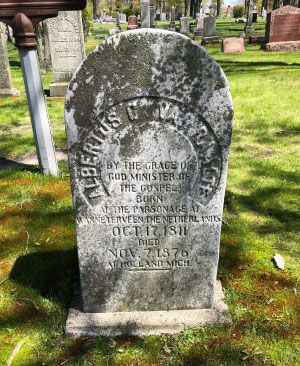
The grave of Albertus C. Van Raalte
-
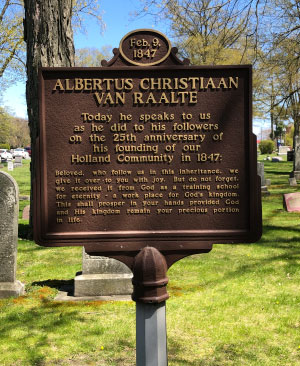
Historic marker at the Van Raalte plot
-
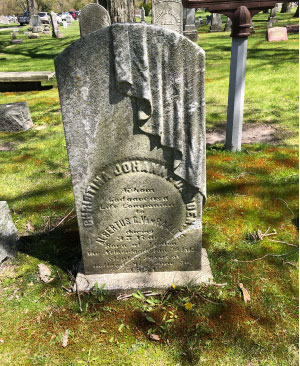
The grave of Christiana Johanna De Moen, wife of Albertus Van Raalte.