

Settlers House
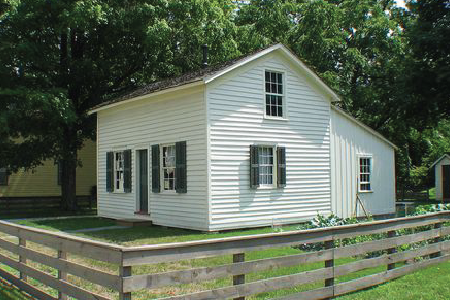
The Settlers House, built around 1867, is a good example of the type of working class homes that were in Holland at the time of the fire.
Barney Kieft, who was 11 years old at the time of the fire and living with his family in this neighborhood, near the Cappon & Bersch Tannery, recalled in 1938:
“We went down to Vander Veen’s hardware store, got all his shovels and fought the fire as best we could. I was only eleven years old, but I took a shovel and threw sand on the grass wherever it started to burn. Teams of horses and plowmen were plowing up the ground in front of the flames. When we saw we were losing ground, my father and I went home to see what we could do about saving some of our property. We had all our winter’s provisions stored in the house, and we had a barn full of hay and two cows. We freed the cows and they saved themselves. We had our winter’s supply of flour and cattle wheat upstairs in our house, but we didn’t have time to save that. We directed our thoughts to protecting the provisions in the cellar; beef and pork salted down for the whole winter, 2 six gallon jars of June butter, a couple of kegs of herring, a 5 gallon keg of syrup, etc. In order to try and save these provisions, we carried pails of water and threw them on the floor above the cellar until the whole floor had a pool of water kept in by the threshold of over an inch in depth. However, it proved to be no good. Everything burned except a galvanized iron pail that I grabbed, and a book of twelve sermons that was lying on the table and which I mistook for the Bible. We left home when our barn started to burn”.