
Holland Rebuilds
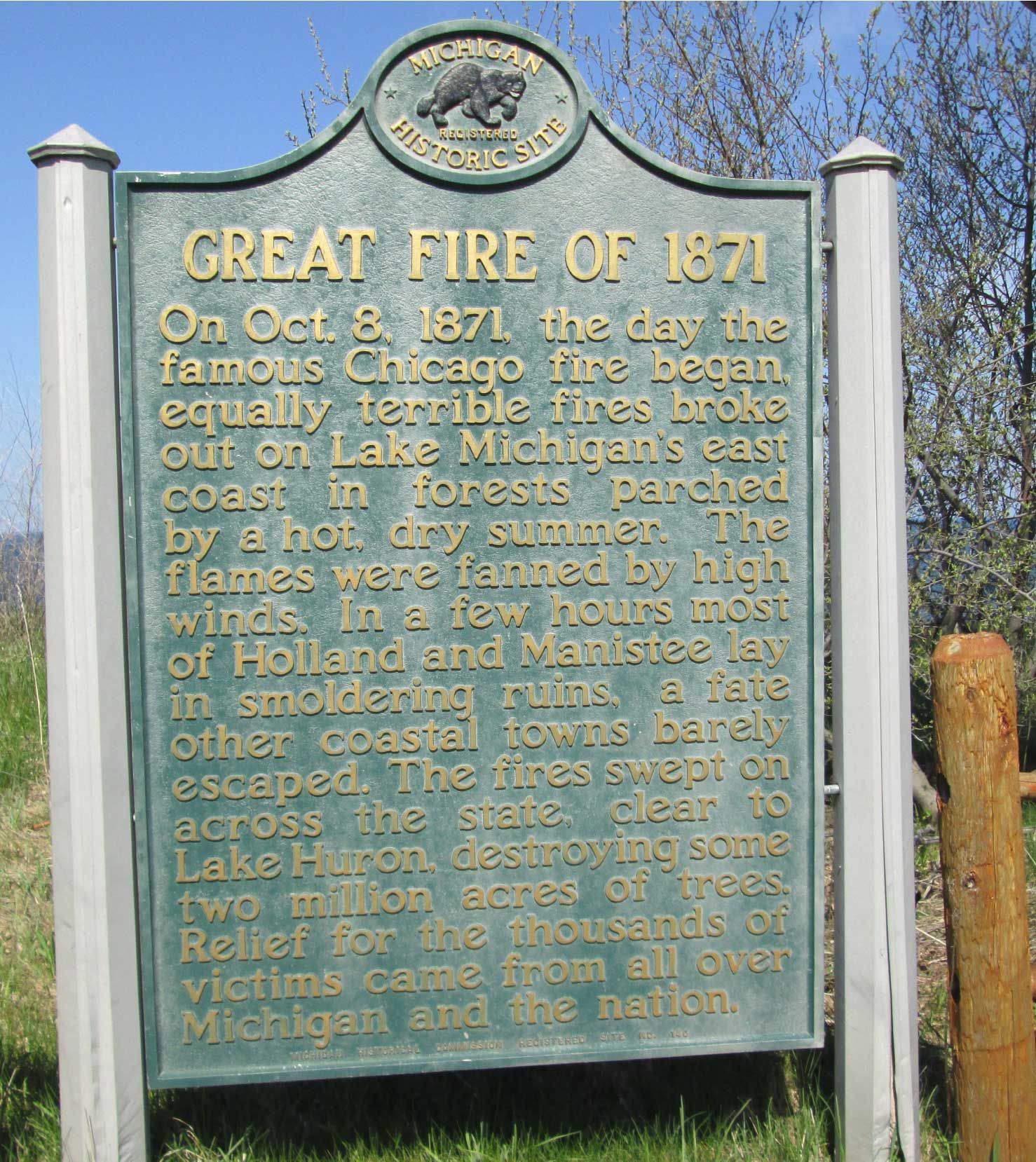
Great Fire of 1871 Historical Marker located at the Settlers House. Click to enlarge.
Recollection of Barney Kieft:
“Two days after the fire I went downtown and they were giving away groceries right close to where the old jail was located. They gave me more cheese and butter and bread and other groceries than I could carry. In the afternoon I went down to Hope College. They were giving away all kinds of clothing. I took all I could carry—brand new underwear and suits and dresses. I was dead tired lugging it home."
"The next day I went to the campus again. I went into a house there. There were lots of stoves there. I asked the fellow in charge how much a stove with a big tank in the back would cost. It was a great big dandy stove. He said they were not for sale but were for the families whose homes were destroyed by fire. I told him our home had been destroyed, so he took down my name and told me to take the stove along. I was only eleven years old, so I didn’t know what to do. Then I saw a farmer with a wagon. I asked him how much it would cost to have him transfer the stove. He said it would cost a quarter. So I told him where to take it. You should have seen the eyes of my mother and father when we drove in the front yard with that big stove. They were so surprised and speechless they simply could not say anything."
"It was certainly fine to see how the rest of the nation responded to our immediate needs. In a couple of days everybody had more than they could use; groceries, meats, clothing, lumber, everything! It was wonderful. We built a whole new house out of relief lumber.”
Excerpt from the Grand Rapids Daily Eagle, Tuesday, October 10, 1871:
“The people of Holland need assistance and the inhabitants of Grand Rapids must aid them promptly.” The morning after the fire (Monday, October 9), Grand Haven sent a boat with provisions and clothing down to Holland, which “were received by truly thankful hearts.”
Excerpt from, “Eyewitness Tells of Burning of Holland in ’71,” published in the Holland City News on Thursday, October 13, 1932 (during the Great Depression):
“Upon Holland’s ruins a new city has been built. Our streets, parks, public buildings, beautiful homes, industries and business districts speak for themselves…Surely our troubles today are by minor compared with the crisis of 1871 when Holland folk had no money, no homes, with an outlook only of blackened ruins and smoke-filled skies.”