
About the Cappon Home and Family

The Holland Museum was gifted the Cappon House in the 1970s by the City of Holland after the passing of Lavina Cappon, one of Isaac Cappon’s 16 children. Lavina was a Home Economics teacher at Holland Public and lived in the house almost her whole life. She recognized the importance of it and decided that upon her death, she would sell the home to the city.

The interior of the home was then given to the Netherlands Museum (now Holland Museum) to restore and turn into a house museum. The house was restored in the 1990s to the early 2000s and is set to the year 1900. This is because Isaac passed away in 1902 and a detailed inventory and photos were taken of every room in the house.


Who Was Isaac Cappon?

Isaac Cappon

Isaac was born in 1830 in the Province of Zeeland. He then came to America in 1847 at age 17 with only a 4th grade education. He was one of many Dutch immigrants to travel to the United States during the mid-1800s. The Netherlands were facing a recession, religious persecution, and famine simultaneously which led thousands of people to leave the country in search of a better life.

Upon his arrival, Isaac settled in New York for a period and worked as a farm hand. He later moved to Holland and started up a tannery of his own with business partner John Bertsch. The tannery was founded in 1857 and was called the Cappon & Bertsch Leather Company. Isaac became the first mayor of Holland in 1867 and served four non-consecutive terms. He was married twice. First to Catarina De Boe in 1852 and they had 11 children together. After Catarina’s passing in 1887, Cappon married Jacoba De Kok and they had 5 more children together.
Building the Capp0n Home
After the Fire of 1871

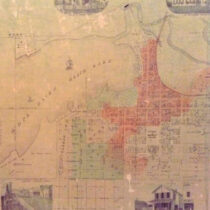
The Cappon House was built in 1874, just three years after a massive fire burned two thirds of the city. Several other fires blazed across the Midwest that same October night and is referred to as the “Night America Burned.” Read more...

Outside the Home

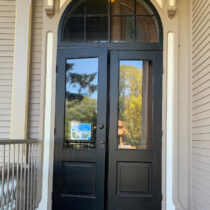
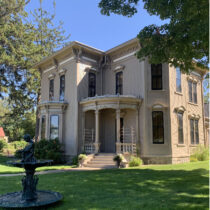
The house is an Italianate style which was extremely popular in America at the time. The architect was Jan Kleyn and the builder was Gradus Van Ark. Italianates have several unique features that make them easy to spot including the tall first floor windows, low pitch hipped roof, double doors, and bay window. Read more...

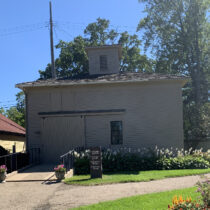
Cappon Carriage Barn

The house is an Italianate style which was extremely popular in America at the time. The architect was Jan Kleyn and the builder was Gradus Van Ark. Italianates have several unique features that make them easy to spot including the tall first floor windows, low pitch hipped roof, double doors, and bay window. Read more...

First Floor

The first floor of this 19th century home was primarily used as a public space. It was grand and beautiful to show off the wealth and status of the Cappon Family. When visitors arrived, they gave their calling card to the maid. Entering the home today is a different experience, but but it looks much the same. The first floor included a main hall, parlor, sitting room with office space, a dining room and china closet, kitchen, pantry, washroom, bathroom, master bedroom, and a back stairway that was reserved for the housekeeper and the Cappon children.  Explore more...

Second Floor

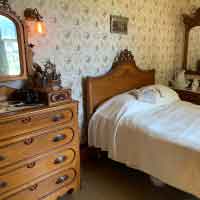
The second floor of the home was a private space that visitors rarely saw. The children’s bedrooms were all located on the second floor as well as a nursery, a spare bedroom, the maids bedroom, and an upstairs sitting room. The master bedroom was located on the first floor. Explore more...

Holland Museum All Rights Reserved