Holland Fire Walk Virtual Tour
Walk the path of the Fire of 1871 while hearing stories of survival shared through images, objects, and firsthand accounts.
Listen Now! The Holland Fire of 1871
This audio is was cultivated by individuals of the Holland Museum whose mission is preserving the past and imaging the future. We encourage you to listen to this recording as a complement to the Holland Fire Walk Virtual Tour to reflect on the history of the Holland Fire of 1871 and learn more about the people who lived through it.
Fires Across the Midwest
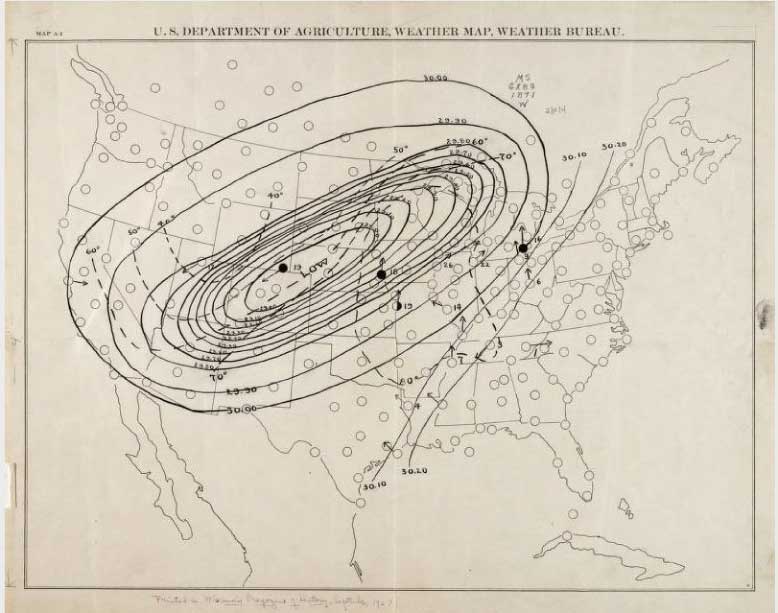
September 1871 had been incredibly dry. The entire region was in the midst of a drought—one scholarly text describes the area as “one vast powder keg.” On October 8, 1871: “The Night America Burned”, strong winds struck the Midwest, the product of a large cyclonic storm (check out the map of winds below). When the wind hit the drought-ridden Midwest, it created conditions perfect for fanning fires. Fires that may have otherwise been small or easily contained instead worsened quickly, destroying communities in their paths.
Click on pictures to enlarge.
The Great Chicago Fire
The fire raged from October 8 through October 10. It killed about 300 people and destroyed over three square miles of property, 17,500 buildings, and caused $400 million in damages.
The Peshtigo, WI Fire
The most deadly fire in American history, the Peshtigo, Wisconsin fire killed between 1,200-2,500 people. It burned an area of forested, rural Wisconsin about twice the size of Rhode Island and destroyed twelve rural communities.
The Great Michigan Fire
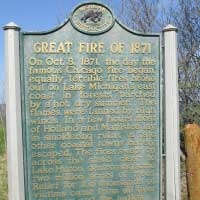
Three separate fires occurred in Michigan on October 8, 1871: the Manistee Fire, the Port Huron Fire, the Holland Fire. Together, they are known as the Great Michigan Fire. Because the fires engulfed huge swathes of Michigan wilderness that were home to an unknown number of loggers and settlers, the true death toll is nearly impossible to determine. Collectively, the Great Michigan Fire may have claimed anywhere from 500-1,000 or more lives.
Holland, October 8, 1871
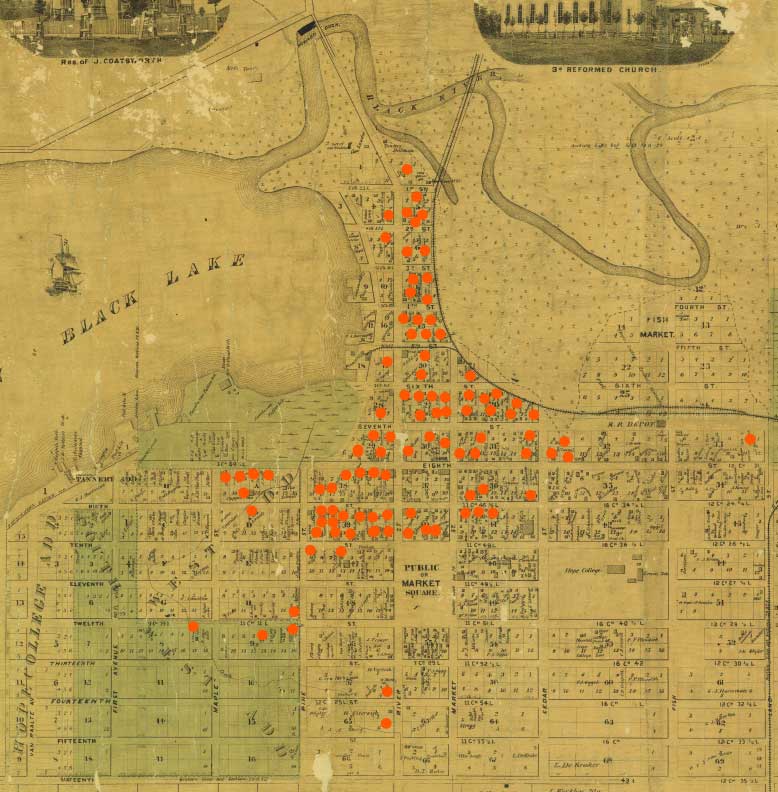
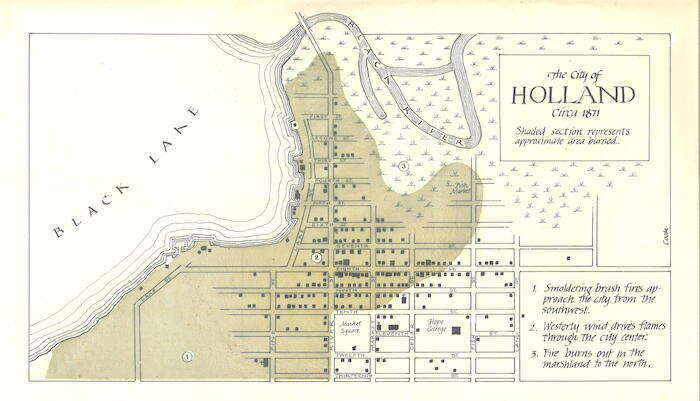
Small fires had been occurring regularly in the wooded areas to the south of the city due to the drought conditions. At 2:00 p.m. on Sunday the 8th, one of these small fires began approaching the edges of the city. Church bells sounded the alarm—a common warning practice—as many residents were still at church services. Residents gathered at the edges of the city, along the forested areas, and for hours helped fight the fire, attempting to stop it from advancing on the city.
A recollection of Holland resident G. Van Schelven: “As night advanced the wind increased in force, until at midnight it blew a hurricane, spreading the fire and the flames with an alarming velocity toward the doomed city.”
Follow the Path of the Holland Fire
Settlers House
The Settlers House, built around 1867, is a good example of the type of working class homes that were in Holland at the time of the fire. Read more
Holland Civic Center
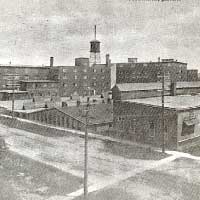
The Holland Civic Center is the former site of the Cappon-Bertsch Tannery, owned by Isaac Cappon (Holland's first mayor) and John Bertsch. The tannery was one of the first buildings to go up in flames as the fire came down from the south. The process of tanning required the use of bark, and there were piles of dry bark stored around the tannery grounds. Read more
Site of Mrs. Tolk's Cottage
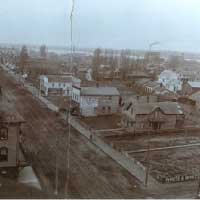
There was just one death as a result of the fire—Sara Ooms Tolk, the widow of Jacob Tolk, who was in her 60s. She lived in a small cottage near the corner pictured below (now 9th and Pine). In the confusion of the fire, Mrs. Tolk was first reported as missing. Her body was discovered later. No one is sure how she died—one newspaper account reports that she was trying to retrieve her belongings, but another speculates she was asleep and did not wake up until it was too late to escape. Click for larger picture
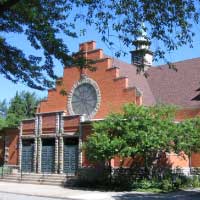
Third Reformed Church
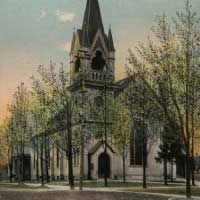
One of the first buildings to go up in flames as the fire moved north was the Third Reformed Church. Fire alarms began sounding in the afternoon, while people were still at church services. Read more
Hope Church
Many Holland residents believed that the fire was a punishment from God because there were several fires across the Midwest and because so many churches burned. On October 12, 1871, a joint issue from all three Holland newspapers reported: “The Almighty has spoken, and the carrying out of His voice is powerful. Our dear city of Holland is said to be no more.” Click for larger picture
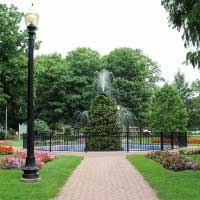
Market Place - Centennial Park
In 1871, Centennial Park was an open market space. During the fire, people used the area to pile their belongings, hoping the park would be spared from the flames. Some also tried burying their possessions here trying to protect their things from the flames. People fleeing Holland also buried their possessions in the sand by the lake. Many watched from boats on Black Lake as the city burned in the darkness. One newspaper account reported that six people had walked to Grand Rapids from Holland, fleeing the fire and looking for shelter with friends. Click for larger picture
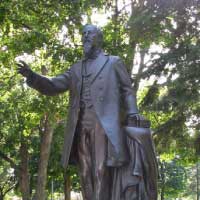
Albertus C. Van Raalte
Albertus Van Raalte was not in Holland at the time of the fire, but his family opened their home to those seeking refuge from the flames. Many people used the Van Raalte property as a meeting place for family members traveling separately. Read more
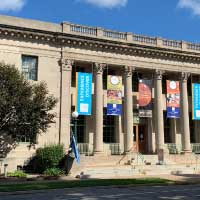
Holland Museum
Excerpt from “Incidents of the Burning of Holland City,” published in the Hartford-Dayspring News in 1871: “H.D. Post and his family were aroused just in time to wrap their nightclothes around them, leaving their home and fine property, which had required 25 years to accumulate, to the greedy ravenous flames." Read more
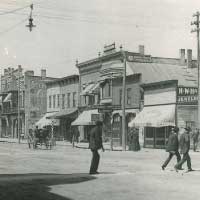
Devastation on 8th Street
Excerpt from “Incidents of the Burning of Holland City,” published in the Hartford-Dayspring News in 1871:
“Many sturdy pioneers, now aged and gray with toils of the last quarter century in rearing a home and gathering around them competence for old age, were reduced from their hoarded thousands to a paltry hundred dollars.” Read more
Holland Rebuilds
Recollection of Barney Kieft:
“Two days after the fire I went downtown and they were giving away groceries right close to where the old jail was located. They gave me more cheese and butter and bread and other groceries than I could carry. In the afternoon I went down to Hope College. They were giving away all kinds of clothing. I took all I could carry—brand new underwear and suits and dresses. I was dead tired lugging it home." Read more